
Addressing the SGBV problem in Nigeria requires a multi-faceted approach. There must be collaborative efforts from the government and law enforcement.
By Soyem Osakwe, Mirabel Centre
The year 2020 has been an incredibly difficult year, more so for victims and survivors of sexual and gender-based violence (SGBV) who have had to deal with the impact of two pandemics; COVID-19 and SGBV.
In early March 2020, it was clear that a lockdown was imminent. The COVID-19 numbers around the world were rising, and governments across the world were taking steps to reduce the spread of the pandemic, by halting activities and reducing movement. We knew it was only a matter of time before the Federal Government of Nigeria would declare a lockdown. By the last week in March, a lockdown was declared in Nigeria and our concern at the Mirabel Centre, was how to support survivors at this critical time? A lockdown meant that there was restricted movement and worse, many women and girls were going to be stuck in the same space as their abusers. Also, children were back at home and spending a considerable amount of time online, a breeding ground for predators. So, there was the danger of increased cases of domestic violence, rape, child abuse and online grooming.

As an organization that works directly with survivors, we were deeply worried about how survivors would access necessary medical and psycho-social services. Our centres in Lagos (Mirabel Centre) and Sokoto (Nana Khadija Centre) remained open even during the lockdown. In addition, we used various channels to inform the public that help was available even during the lockdown. We started a digital and radio campaign days before the lockdown started, to draw attention to the looming problem and heightened risks, and to provide help lines for those who were in danger.
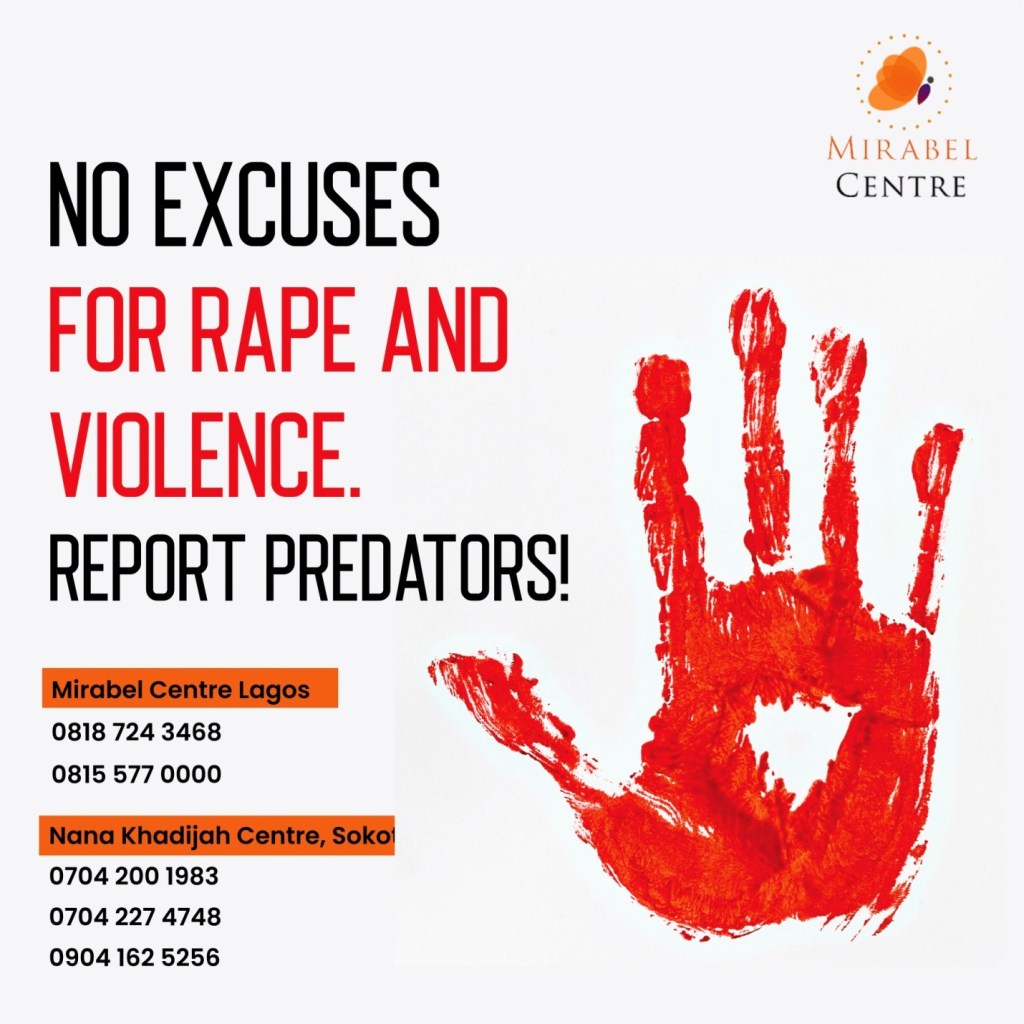
By April, we were flooded with multiple reports especially via Twitter and Instagram, citing cases of abuse. We also received several referrals from the police and other organizations. These reports were coming from all over the country. Cases outside Lagos were referred to sexual assault referral centres in the states where the incident occurred, or referred to the International Federation of Women Lawyers (FIDA).
The nationwide lockdown exacerbated the already lingering problem of SGBV. The horrifying surge in rape across the country was evident in May/June 2020. In May, Uwa was brutally raped in a church in Benin, the gruesome attack led to her death. Barakat Bello was raped and killed in her home in June; and Grace Oshiagwu was raped and killed in Ibadan.
Speaking on the surge in rape cases during the Covid-19 lockdown, Itoro Eze-Anaba, the founder of Mirabel Centre, said, “Before Covid-19, rape was a pandemic. When we started in 2013, we used to see an average of 20 people a month. Sometime in 2015, the number started to increase to the extent that before the pandemic, we were seeing 85 people a month, sometimes 100. And it was becoming routine to see a 100 or more every month. The only thing is that the reportage increased during Covid-19 so people were encouraged to speak out.”
In June, the Inspector General of police noted that between January and May, there were 717 reports of rape across the country. In July, the minister for women affairs and social development, Dame Paulin Tallen, stated that over 3,600 rape cases were recorded across Nigeria during the lockdown. Also during the recent UN-EU Spotlight Initiative town hall meeting on SGBV, the minister noted that for every 1 girl /woman that reports, 10 did not report. This further indicates how widespread the problem of SGBV is and how much more work we all need to do.
We believe that sexual assault referral centres (SARCs) should have been listed as essential services during the lockdown. It was terrifying to see the rise in violence against women, but even more troubling to see that survivors were trapped and unable to move from the places where the abuse had taken place to a centre where they could seek help.
In the aftermath of the lockdown, we’ve learnt that pandemics like COVID-19 affect women and men differently. Pandemics and disease outbreaks further exacerbate inequalities for girls and women, who are also often the hardest hit. Worse still, women are exposed to varying degrees of violence during a pandemic.
Addressing the SGBV problem in Nigeria requires a multi-faceted approach. There must be collaborative efforts from the government and law enforcement in ensuring that that perpetrators are held accountable; that laws are enforced no matter who the perpetrator is and that survivors have access to medical, psycho-social, counseling and legal services.
It is imperative that state governments in Nigeria domesticate the Violence against Persons Prohibition Act (VAPP) and the child rights act. The VAPP was signed into law in 2015 and the National Agency for the Prohibition of Trafficking in Persons (NAPTIP) was mandated to administer the provisions of the Act. The VAPP states that once the crime of rape is proven, the offender must be sentenced to a minimum penalty of 12 years for rape. However, the judge still has the discretion to sentence the offender to more than 12 years. The VAPP Act also makes provision for compensation to victims and the protection of their rights. It is also the first piece of legislation in Nigeria which recognizes that men are capable of being raped. All previous laws only defined the offence in relation to women.
At the Mirabel Centre, we teamed up with ride-hailing company, Bolt, to provide free emergency rides to women and girls in dangerous situations. This partnership helps solve the challenge of mobility by getting survivors to the Centre. In addition, we collaborated with emergency reporting app, Aabo. This app allows anyone in danger to trigger an emergency alert that helps the Mirabel Centre pinpoint the person’s location and inform a trusted contact. This is a preventive measure which could save someone who’s in danger.
We understand that the problem of sexual violence must be addressed at all levels, the home (where it is shockingly prevalent); schools, religious organizations and other institutions. To end violence against women, men would need to become allies in the fight against SGBV. In June, we launched the Men against Rape initiative. The heart of this initiative is to build a conscious coalition of men who are committed to ending rape and rape culture, in words AND deeds. Men who understand that rape is not normal, rape is a crime, and rape is not a woman problem.
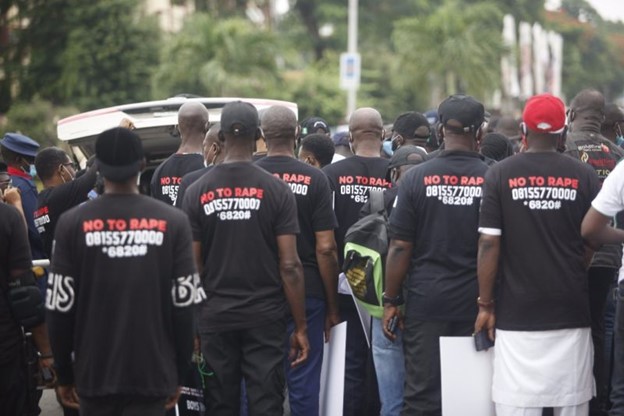
Ending sexual violence is not one person’s job; we must all do our part to sanitize our spaces and spheres of influence. The year 2020 has taught us that as a nation, and as a people, we must take a firm stand against SGBV. It is time to stop paying lip service and tackle this menace which has claimed the lives of young girls and women around the country.
About Mirabel Centre
Mirabel Centre, managed by Partnership for Justice, is the pioneer Sexual Assault Referral Centre in Nigeria with a mandate to provide free medical care and psychosocial support for survivors of sexual violence in Nigeria. Since its inception in 2013, the Mirabel Centre has served over 5,600 survivors of sexual violence.
Guest Author

Soyem Osakwe
Soyem is a Communications Consultant at the Mirabel Centre.
Join us
Get new content delivered directly to your inbox.
Latest Posts
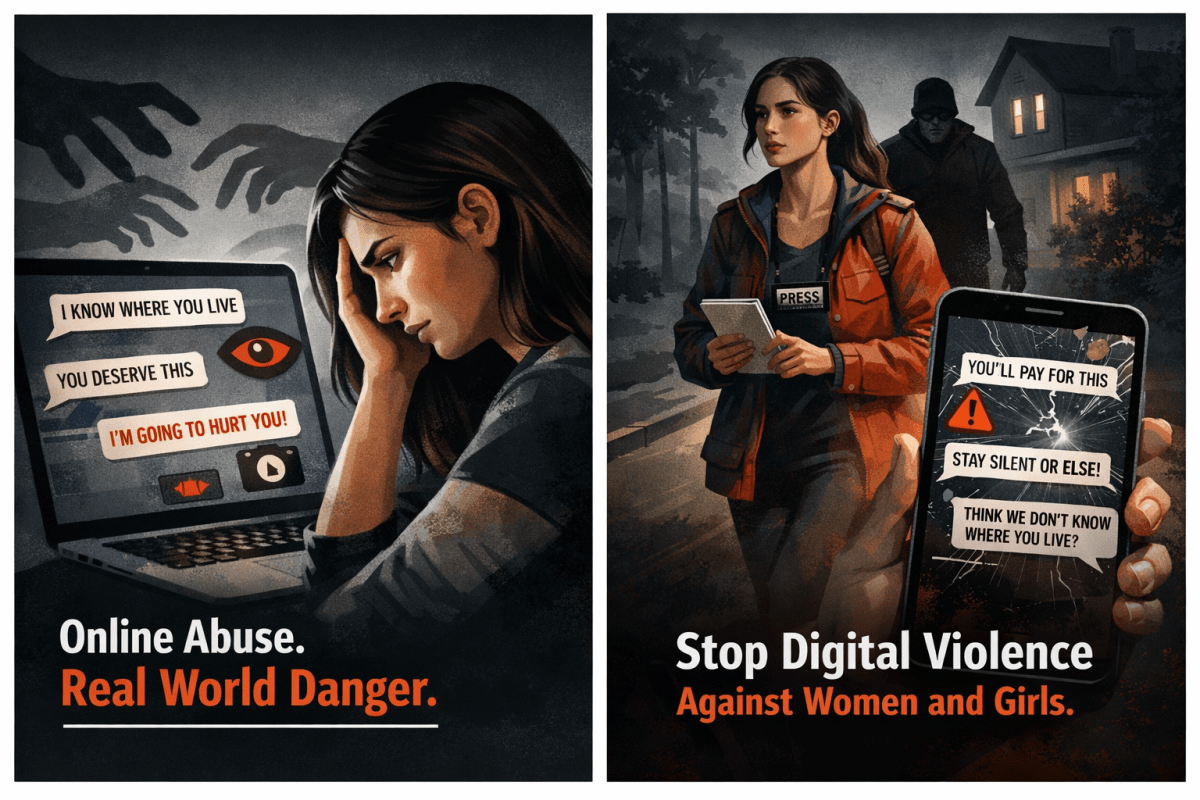
Digital Violence Is Real Violence. Why Prevention and Justice Must Catch Up
Digital violence against women and girls is escalating, with growing evidence linking online abuse, cyberstalking, and image-based abuse to real-world harm. As technology evolves faster than prevention and justice systems, survivors are left exposed to risk and inadequate protection. This blog explores the evidence behind technology-facilitated gender-based violence and outlines what must change to ensure…

5 Ways To Help A Person Going Through Gender-Based Violence
Gender-based violence isn’t just a personal issue. It’s a global crisis.
According to UN Women, nearly 1 in 3 women worldwide (about 736 million) have experienced physical or sexual violence in their lifetime. And those are just the cases we know about. Many more suffer in silence due to fear, stigma, or lack of support.
…
Using Technology to Combat Conflict-Related Sexual Violence
Conflict-related sexual violence is one of the most horrific human rights violations, affecting women, men, girls, and boys in conflict zones at alarming rates.
Over the past decade, the UN has verified more than 51,000 cases, with a staggering 50% increase in 2023 alone. Women and girls account for 95% of victims, and nearly a…
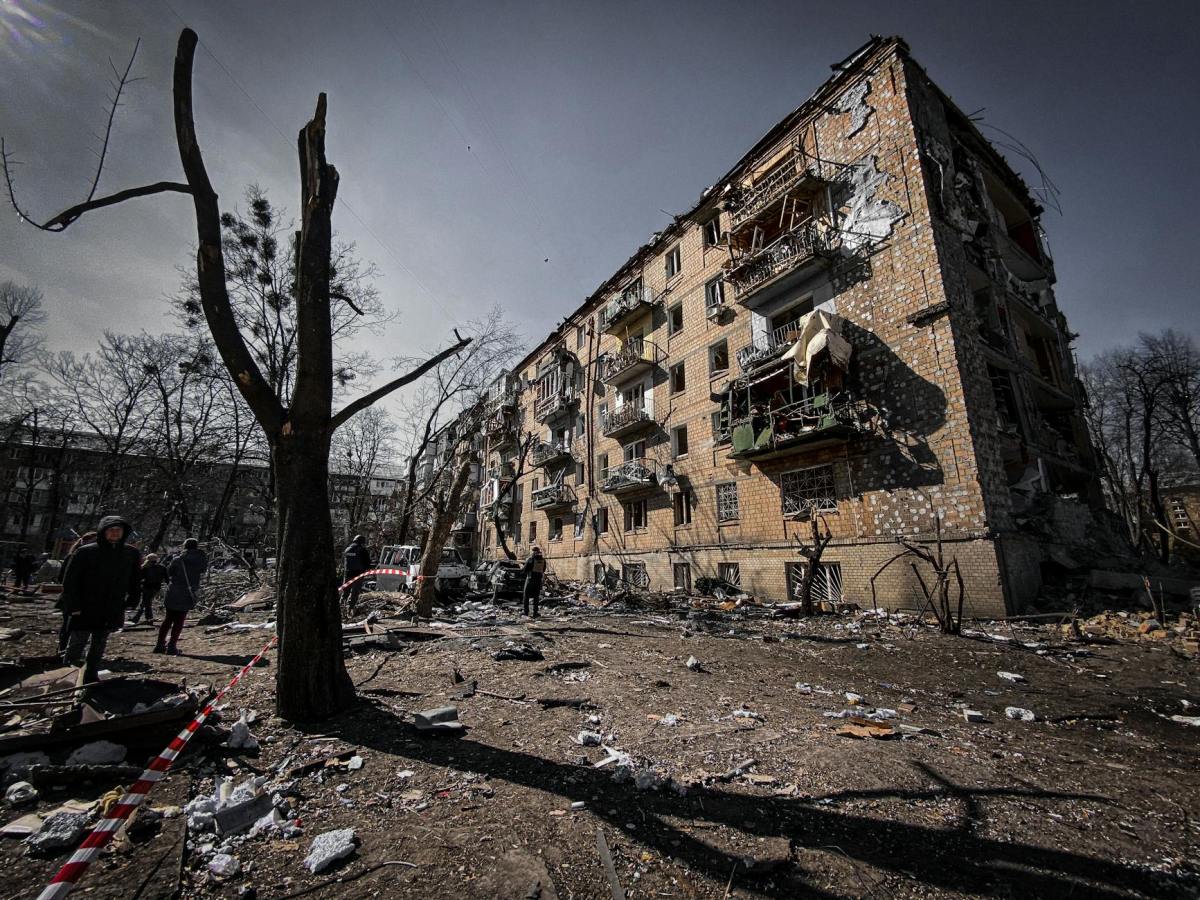
Addressing Gender-Based Violence in Humanitarian Crises
When humanitarian crises erupt, whether due to conflict, natural disasters, or economic collapse, gender-based violence (GBV) often emerges as a hidden yet pervasive crisis in its own right. The breakdown of societal structures, the chaos of mass displacement, and the erosion of community cohesion create an environment where women and girls are disproportionately affected. Amid…
Something went wrong. Please refresh the page and/or try again.
 Safe Speaks